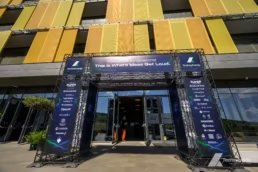
Bold Ideas, Real Talk, and the Minds Building What’s Next
Now in its 13th edition, Techsylvania continues to be a must-attend event for tech leaders, founders, and future-focused thinkers across Central and Eastern Europe. Day 1 set the tone for Where Ideas Shape the Future, delivering sharp insights on scaling companies, building with AI, navigating industry shifts, and unlocking the region’s next wave of innovation.
From Center Stage to the Workshop Stage, where attendees got hands-on with the topics shaping their industries, one thing was clear: the future belongs to those who pair bold thinking with the courage to build it.
Here’s a look back at some of the standout moments from Day 1 of Techsylvania 2026.
CENTER STAGE
Building Eastern Europe’s First Tech Entertainment Decacorn – Sacha Dragic, Founder & CEO Super Technologies
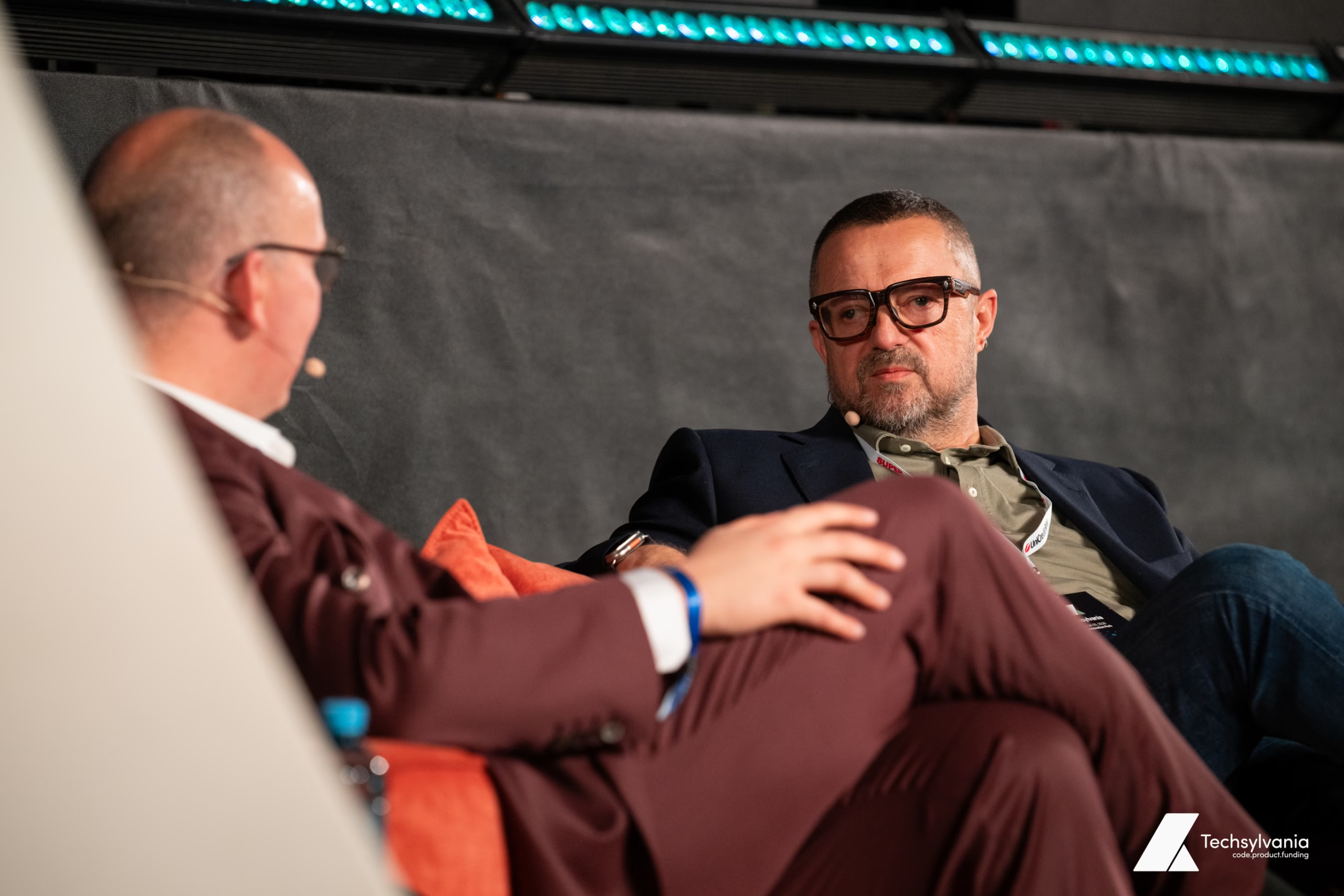 Sacha Dragic spoke with Philipp Kandal about what it means to build a global technology business rooted in Romania. Sacha spoke candidly about the experience of building without a safety net, in a constantly shifting landscape, and about why he believes ambitious founders in the region are facing a defining moment for their global growth potential. This is one of the reasons Super became a technology company with global reach that attracts talent from giants like Meta, Amazon, Google, and Netflix.
“If at the start of the year we probably had less than 1% of our code written by AI, we’re now somewhere between 30 and 40%. I’m an advocate for a sustained approach to rolling out AI. Obstacles will definitely come up, but it will be far cheaper to work through the discomfort of solving some costly problems than to not act now and risk becoming irrelevant in the years ahead.”
Building an AI Ecosystem: A UAE Perspective – Hussain Al Mahmoudi, CEO Sharjah Research, Technology and Innovation Park
The next talk brought Hussain Al Mahmoudi, a driving force behind Sharjah’s innovation ecosystem, to the stage to discuss what it takes to build an innovation culture, and what regions like Cluj could learn from it. His core message centered on partnership: a “local mission, global vision” approach that built connections across ecosystems from East to West, opening doors to investment, talent exchange, and technology transfer.
On young people navigating an uncertain world, he was direct about what’s being lost, genuine human interaction, at a time when job applications are flooded with AI-generated submissions and real opportunities still come from real conversations. He also addressed the gender gap in venture capital head-on, pointing to dedicated funding programs for women in tech and arguing that closing the gap starts with a genuine belief in equal partnership, not just a program on paper.
From Zero to Acquired: How User Research Built an AI Wearable Worth Buying – Brett Bejcek, Founder Click Clack Labs
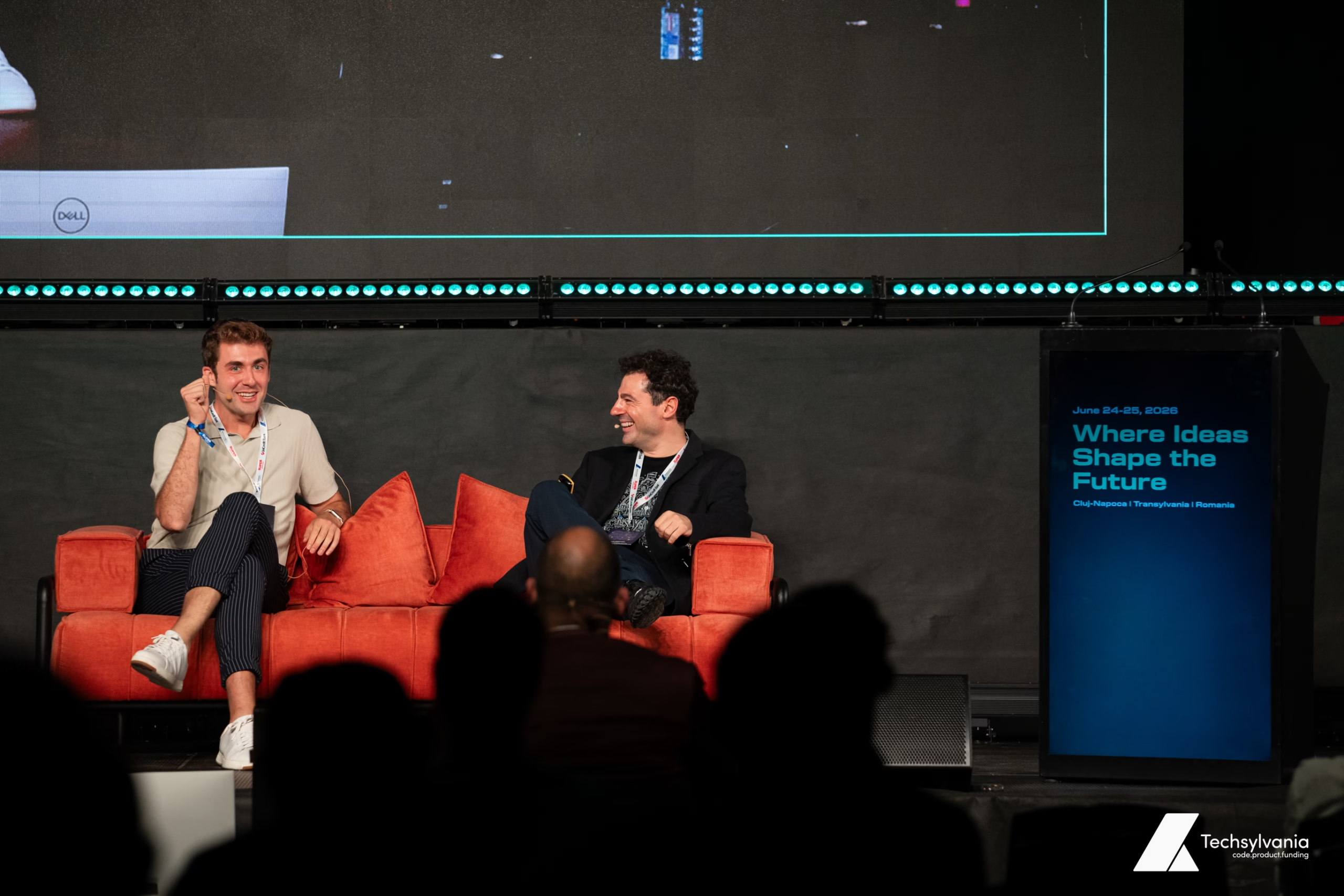
In conversations with Vlad Ciurca, his lesson was to spend fewer “innovation tokens” on invisible infrastructure and more on what users actually feel, backed by a clear privacy policy and strong encryption, not architectural perfection. On user research, his framework was equally disciplined: start with the problem, list your assumptions, validate them by talking to 8-10 people in a day, and weigh feedback based on whether it’s actually coming from your ideal customer.
“User research is really important. That’s the backbone of what you’re building, especially in the age of AI, when AI is trained on general human knowledge. The real specialty is intimately knowing your users very, very well.”
The Company Around the Music – Oana Ruxandra, Co-Founder & CEO, PopHatch
Oana Ruxandra shared a revealing and deeply personal experience, from arriving in the United States in 1987 without speaking English, to building BlackRock’s India analytics team and running digital strategy at Warner Music and Universal. Her core belief: music is not a song, but a participatory experience, and Pop Hatch is built to help independent artists turn that belief into a real business. Asked what she had to learn after leaving the corporate world, her answer was disarmingly honest: how to validate herself.
From Banking to Digital Platforms: Reimagining Financial Services in the AI Era – Tsvetelin Minchev, Digital & Information Director, UniCredit Bank
The banking session brought a different kind of energy to Center Stage, as Tsvetelin Minchev walked through what it means to modernize a bank from the inside. His framing was sharp: nobody wakes up wanting to be “onboarded”; they want a credit card or a loan, so UniCredit stopped treating onboarding as a gate and embedded it into the product request itself, shrinking the journey from days to 24 hours, with the goal of getting to one click.
What stood out most was his take on where transformation stalls: not the technology, but people and mindset, and his view that leadership in the AI era is shifting from having the right answer to asking the right questions.
Innovation Takes Flight: Tech, Aviation, and the Entrepreneurial Journey – Michelle Rosa-Wolfe, Executive Vice President, VistaJet
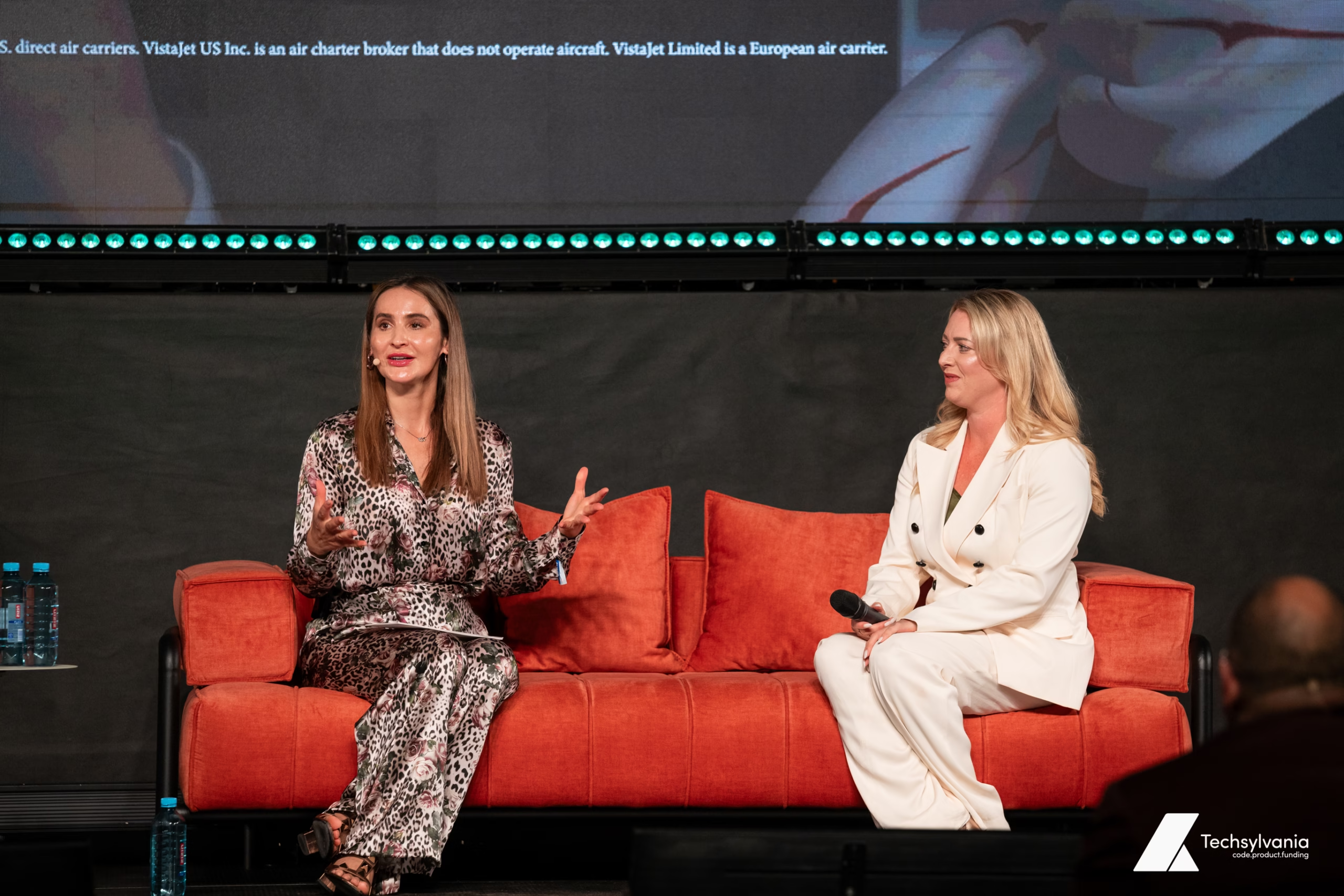
Natalia Brzezinski sat down with Michelle Rosa Wolfe, VP at VistaJet, for a conversation that started with private aviation and ended up being about the shifting value of time and in-person connection. Michelle, with VistaJet for a decade as the fleet grew from roughly 30 to nearly 300 aircraft, spoke to a subscription model with guaranteed hours rather than aircraft ownership, which sold over 210,000 hours last year alone. The thesis resonated beyond the luxury angle: crossing borders is more valuable than ever, customers are getting younger (half are under 45), and founders increasingly treat private aviation as a productivity tool rather than a status symbol.
Bootstrapping in Ancient Times (Pre Claude + Codex) – Praveen Ghanta, Founder & CEO, Fraction & Raj Udeshi, Founder & CEO, FarmClub
The afternoon opened with one of the more refreshingly contrarian panels of the day, as Praveen Gantha and Raj Udeshi sat down with Diana Velica to make the case for building without outside capital. Their argument was practical, not ideological: in a niche market where the biggest exit would never hit unicorn territory, taking VC money just sets everyone up to be disappointed.
“The best funding is the funding that comes from your customers. It’s called revenue.” – Raj Udeshi
On bootstrapping in the AI era, both were clear that leverage has never been higher (Praveen now runs his engineering operation with one developer and two AI licenses), but so has the bar for everyone else, making a defensible niche and fast path to revenue more important than ever.
What comes after AGI? The Post-Biology Era – Sumon Sadhu, Co-Founder, Nativelink
If one talk genuinely stopped the room on Day 1, it was Sumon Sadhu’s. He opened with a provocation: that the human body, running on roughly 20 watts, already outperforms anything humanity has built in Silicon Valley
In the AGI era, he argued, that loop runs faster than ever, but choosing which loop is worth running remains a human job. From there, he moved into genuinely frontier territory, automated lab systems designing proteins that have never existed in nature, engineering plastic-eating enzymes, and even de-extinction, framing it not as spectacle but as humanity moving from reading the catalog of life to writing new entries in it, with the harder questions ahead no longer scientific, but about what we actually want to become.
“A loop optimizes towards a goal but it cannot choose its own goal. The objective always has to come from outside the loop. When intelligence is cheap and loops run fast, the distinctly human thing becomes deciding what the loop is for.”
From Local Champion to European Player: The Mindset Shift Nobody Talks About – Hrvoje Ćosić, CEO, Aircash
AirCash’s origin story makes sense in hindsight. Ten years ago, co-founder and CEO Hrvoje Cosic wanted to buy football tickets from a cash-only seller and decided payments deserved the same disruption smartphones had already brought to transport and accommodation. What started as a mobile wallet in Croatia has grown into a regulated fintech operating across the EU, with over 300 employees and thousands of merchant partnerships.
On scaling beyond Croatia, his playbook was methodical: analyzing transfer volumes, understanding cash-versus-card markets, mapping diaspora corridors, and partnering with retail chains people already trust, but when asked for AirCash’s single superpower in going from local to European, his answer was simple: finding the right people who share the same values.
What the Data Tells Us About the State of AI in 2026 – Jeanie Fang, Director Data & AI, Crunchbase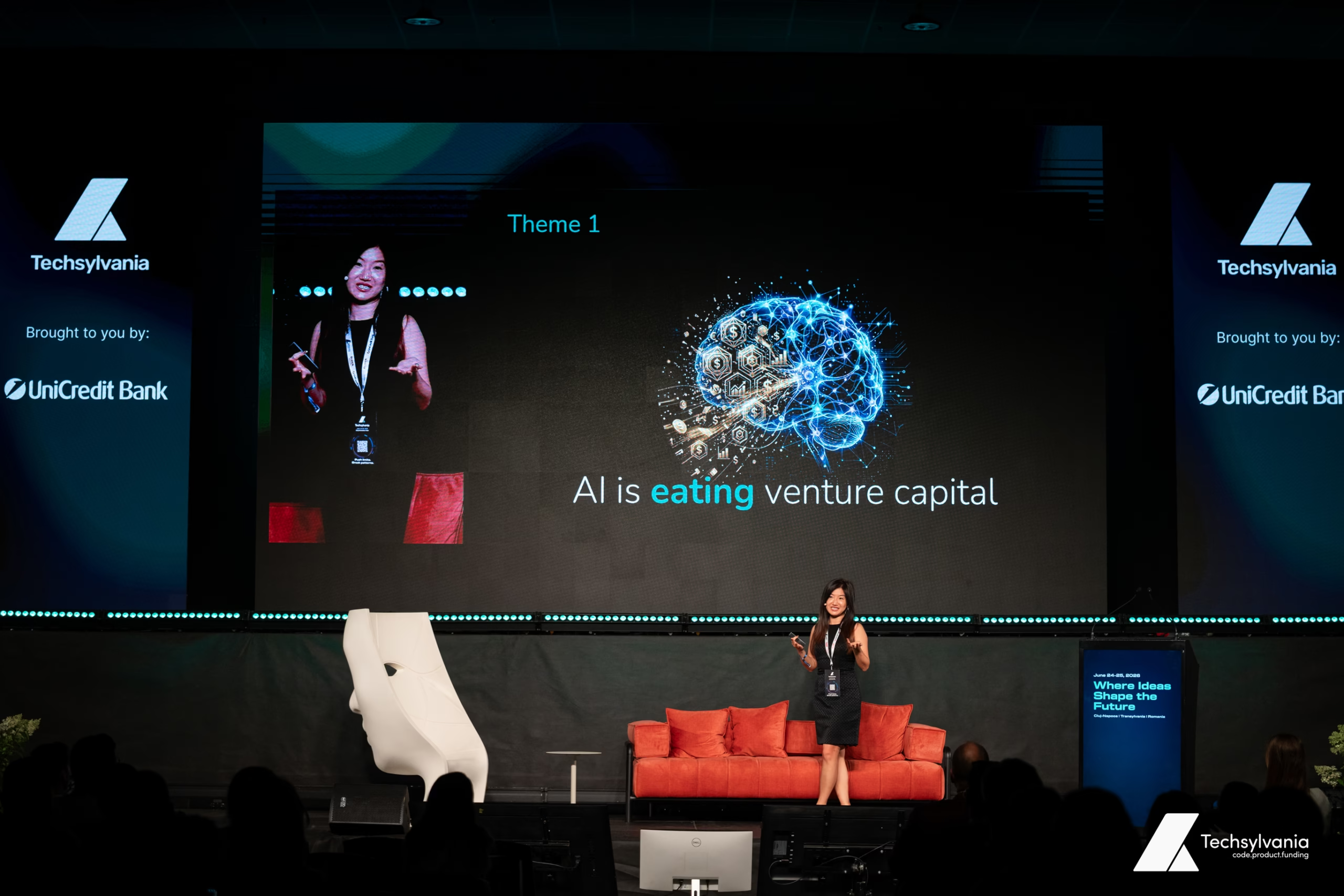
Jeanie Fang, from Crunchbase, brought hard numbers to the stage. Global venture capital funding rebounded strongly in 2026, with the first quarter alone surpassing $300 billion, roughly 80% of which went to AI. OpenAI accounted for nearly 40% of that quarter’s funding, and 226 new unicorns have emerged so far in 2026.
Her message to the founders in the room: the window of opportunity isn’t closing, and the conditions for building something meaningful have never been more favorable.
From AI Regulation to AI Adoption: What It Will Take to Scale in Europe – Guido Brinkel, Policy & Partnerships Lead Germany & CEE, OpenAI
Guido Brinkel, who leads policy and partnerships for OpenAI across the DACH region and CEE, spoke about what it looks like, from the inside, to work at the intersection of AI and governance. Six months into the role, his most important observation is about the speed at which things are evolving. Much of his time is now dedicated to cybersecurity policy: how to build governance structures fast enough to matter, so that legislation can catch up afterward. He closed on a personal note, recalling how he’s seen his own children use AI in different ways, and noting that the social license for AI still needs to be earned.
“The agility of Central and Eastern European markets is a genuine competitive advantage right now. CEE has a real window to lead.”
Q&A STAGE
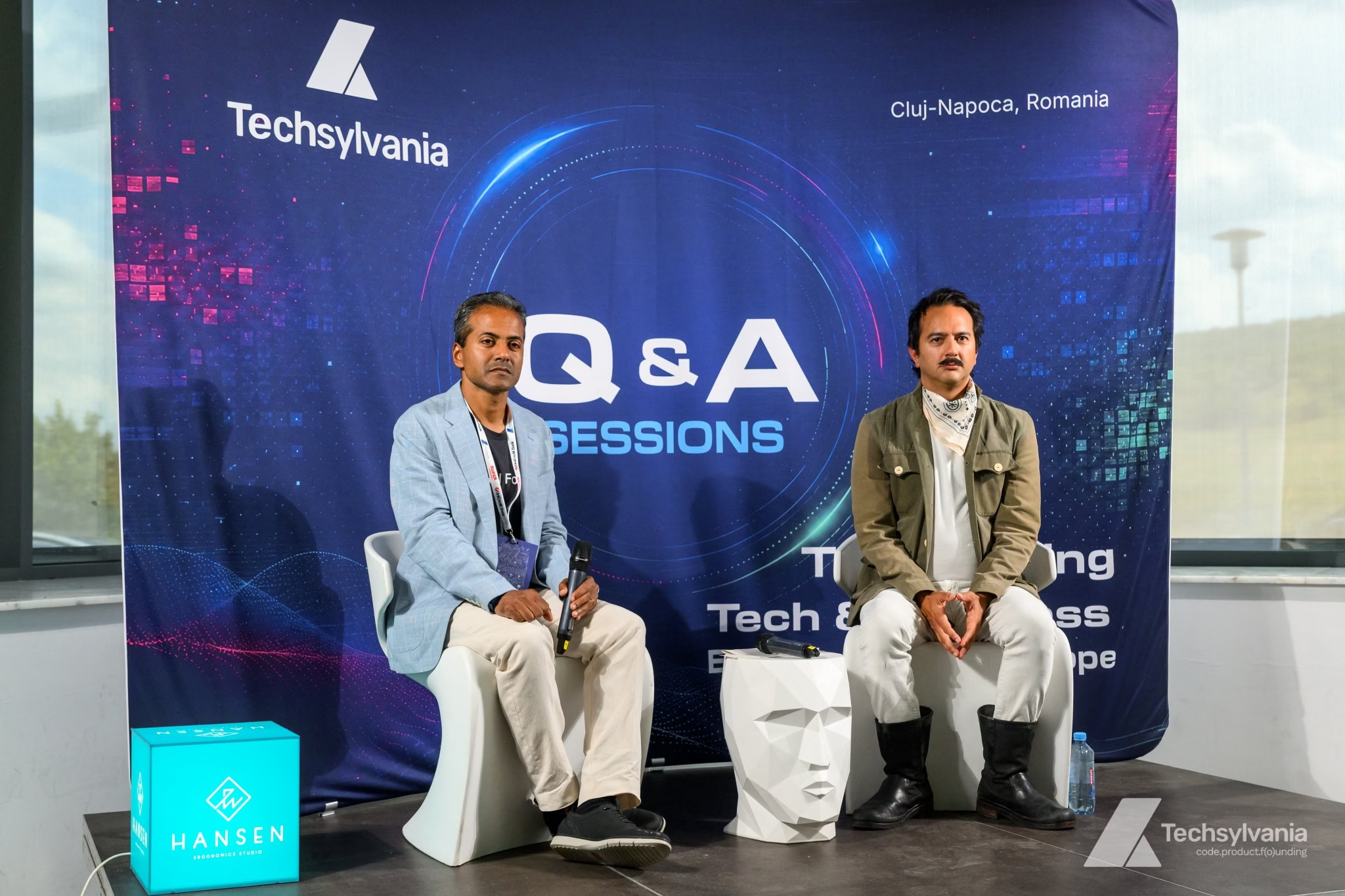
While the Center Stage brought scale and story, the Q&A Stage brought personal connection. Speakers like Sacha Dragic (Super Technologies), Hussain Al Mahmoudi (Sharjah Research Technology and Innovation Park), Brett Bejcek (Click Clack Labs), Praveen Gantha (Fraction), Raj Udeshi (FarmClub), and Hrvoje Cosic (AirCash) engaged in raw, audience-driven discussions on leadership, venture, and the real work behind the scenes.
IMPACT STAGE
Recoding Life: Future AI in Hacking Living Systems to Produce Biotech Products – Dr. Farid Khan, Bioentrepreneur, Salonica Group
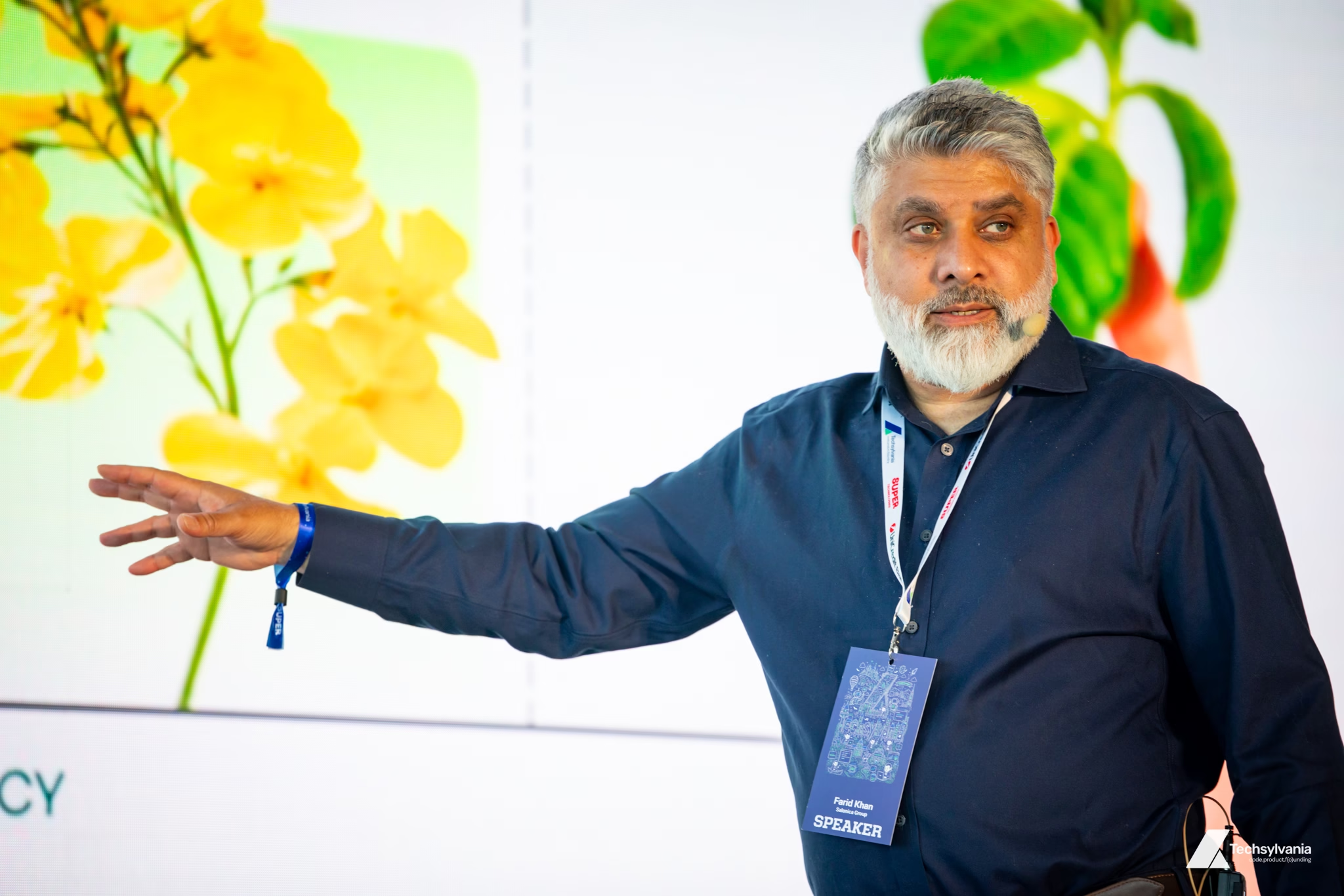 Over on the Impact Stage, Dr. Farid Khan shared how AI is compressing genetic engineering timelines from months to hours. His team engineers plants to produce high-value proteins at scale, free of the contamination risks tied to animal-derived methods, and is now applying the same approach to make therapeutic compounds for conditions like depression and PTSD more accessible.
His closing point: AI isn’t just accelerating biotech; it’s changing who gets to participate in it.
Working Backwards: Building Products That Start With the Customer – Andrew Watts, Chief Product Officer, Super Technologies
Andrew Watts, Chief Product Officer at Super Technologies and former product leader at Amazon Prime Video and Zalando, made the case for starting with the customer problem rather than competitors, current products, or feature requests. He pointed to Prime Video’s early days, when the team froze feature development for nearly two years to focus on getting the app onto devices people already owned, a decision that outlasted years of internal pressure to build differently. At Zalando, that same instinct led his team to build one of the first large-scale conversational AI shopping experiences, reaching six million users across 29 countries.
His closing note: AI increases speed, not discipline, and the risk isn’t building too slowly; it’s building fast in the wrong direction.
Responsible AI: From Hallucination to Trust (Youth Entrepreneurship Session hosted by UniCredit Bank) – Alexandru-Costin Baroiu, Founder & CEO, Heroo Technologies
Costin Baroiu, founder of Heroo Technologies, tackled the gap between what AI can do and what organizations can actually trust it to do, arguing that hallucination isn’t a bug to fix but a default that has to be engineered around with a layered “harness” of checks.
He flagged the 90% automation trap where the last 10% of edge cases carries the most risk and made the case for governance built into system architecture, not policy: gating every consequential AI action behind human review by design, not by request.
His closing vision was the “Company Brain,” a single trusted AI core that knows an organization through its own documents and systems, with every write action gated and audited end to end.
Beyond the Algorithm: Intuition in the World of AI – Smaranda Teleaba, CDMO, L’Oreal
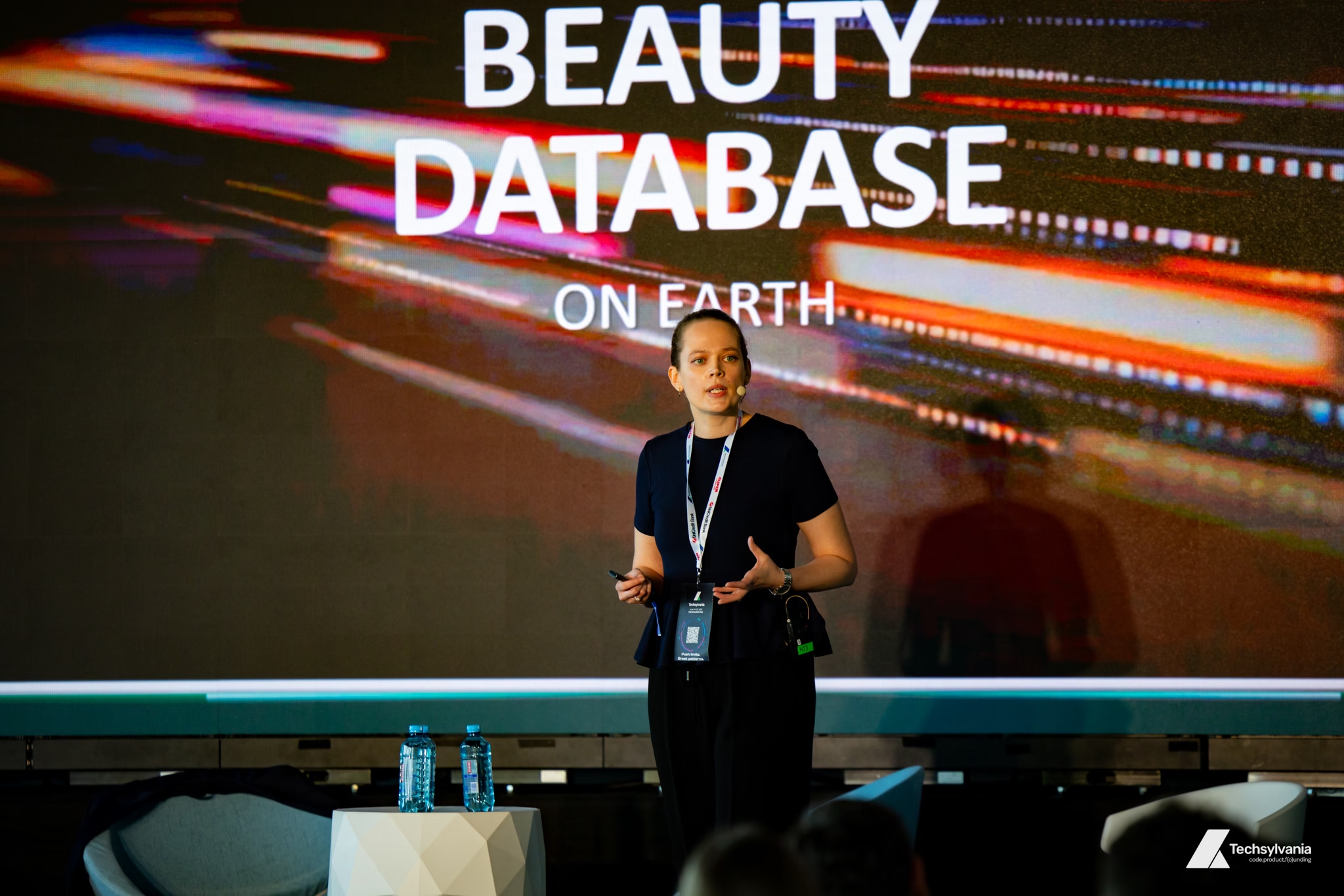
Smaranda Teleaba made the case that at L’Oréal, one of the world’s most data-rich companies, technology alone will never be enough; the future of beauty lies at the intersection of mathematical precision and human intuition. Drawing on 115 years of research and tens of thousands of terabytes of data, she pointed to an AI platform built with IBM that predicts formula success before a chemist mixes a single ingredient, alongside a firm commitment to never use AI-generated images of faces or skin in campaigns.
Her closing thesis: the companies that win in beauty will be the ones that use AI to deepen the relationship with customers, not replace it.
The VC Playbook: Spotting and Scaling Europe’s Next Giants – Nenad Marovac, Founder & CEO, DN Capital
In conversation with Andreas Cser, veteran investor Nenad Marovac reflected on 26 years of venture capital, including bets on Shazam, Auto1, and GoStudent, built on a consistent framework: market, management, product, and velocity.
He was direct about European founders needing to sell into the US from day one, since 90% of meaningful exits happen there, and equally direct about Europe’s limitations as an ecosystem: capital flows remain national, not continental, which is precisely why one flagship conference bringing international investors together in one place and region matters.
The New Founder Credibility Stack: How AI, Media and Reputation Shape Who Gets Funded – Lawrence Rosenberg, Founder & CEO, Rosenberg.Media
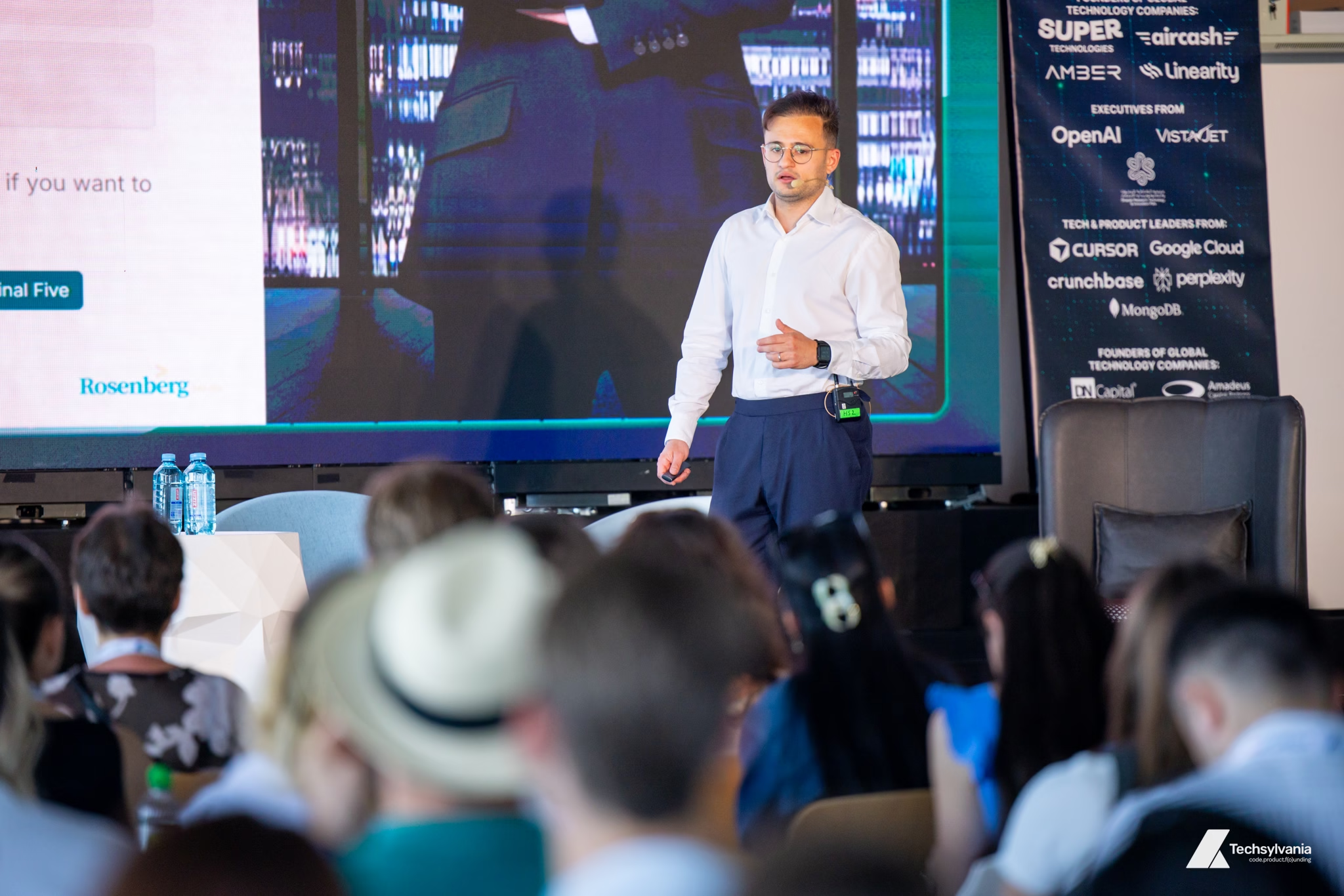
Lawrence Rosenberg opened with a striking example: before his company had a website, an AI assistant already knew he was its founder, built entirely from a single news article. His argument is that founder reputation has shifted from search to synthesis. AI systems now connect owned media, earned media, and public presence into one coherent credibility picture, weighting earned media most heavily because it represents validation you didn’t pay for.
Drawing on his own experience appearing in all 12 episodes of BBC’s The Apprentice, he stressed that attention only works when there are real proof points behind it, and that a single piece of coverage now does more work than ever because AI will index and resurface it indefinitely.
His closing advice: build consistency across your bio, LinkedIn, and website now, because the worst time to start is when an investor can’t find anything about you online.
The System Behind a Production-Ready SQL Agent – Juan Abia, Principal Machine Learning Engineer, Aily Labs
Juan Abia walked through the gap between a promising AI demo and a production-ready system, using Aily’s SQL agent as the case study. His team’s breakthrough was “progressive disclosure,” loading only short agent descriptions upfront and pulling detailed context only for the relevant ones, which solved a real production problem where performance degraded once context windows filled up.
He also detailed building data permissions directly into the agent layer for enterprise governance, and injecting domain-specific knowledge so agents operate with genuine expertise rather than generic understanding. His closing observation was refreshingly honest: we’ve reached maybe 10% of what’s possible with these systems, and the work is just beginning.
Productizing Support: Lessons from Building an Eco-System Co-Founder – Lian Boerma, Chief Product Officer, EWOR
In conversation with Andrea Cordas, Lian Boerma, Chief Product Officer at EWOR, spoke about what happens after a founder is selected into the fellowship, and how one-on-one mentorship gets productized at scale. Her framework rests on three pillars: talent matching, investor access, and curriculum, the last shaped heavily by her neuroscience background and the insight that learning only sticks when it’s immediately relevant to the challenge a founder is facing right now.
The results back it up: EWOR founders average €6 million raised before their next phase, with the most recent cohort reporting rounds above €20 million. She closed on the European ecosystem’s confidence gap, arguing that events like Techsylvania help close it by making the future feel more achievable.
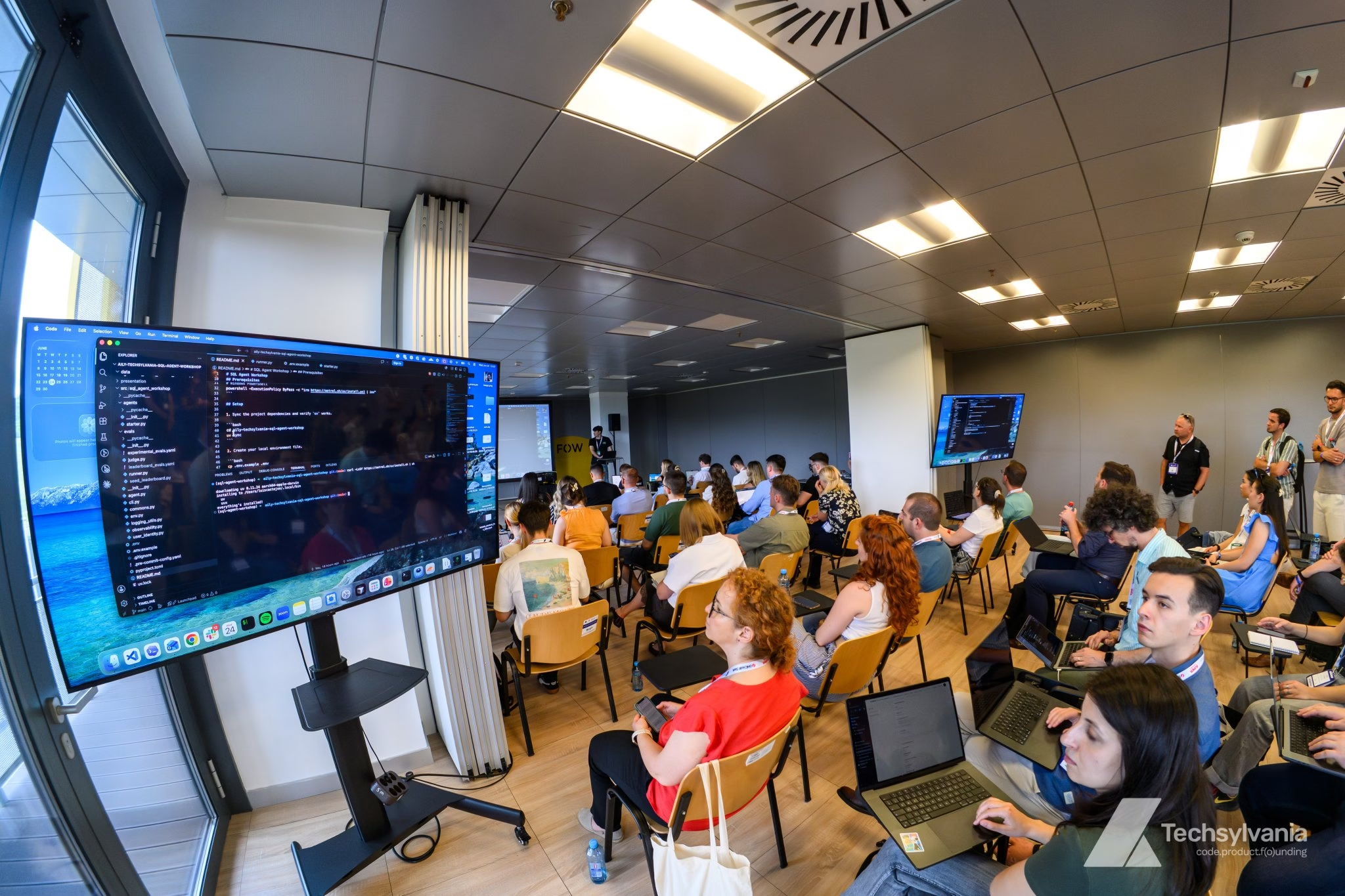 Regarding the workshops, each offered practical and interactive learning opportunities for everyone, enabling us to acquire new skills in specific areas of interest.
- The Garden of the Forgotten Prompt – Iurii Kogan (Google)
- AI-Native Engineering. Shipping Faster Without Losing Control – Speakers: Luka Majstorovi, Filip Reskov, Zsolt Magyari (Super Technologies/ Crafting Technologies)
- Create Your Own SQL Agent – Luis Castejón (Aily Labs)
- Autonomous Development – Task Description to Cloud deployment – Cosmin Dimisca, Laviniu Domnica, Adrian Falcusan, Ioana Frincu (Eazy Asigurari)
- Edge of Quality: How We Moved Streaming Platform Testing to Edge Devices – Adrian Barbos, Emanuel Bucsa, Alexandru Ont (Ensemble)
- From Papers to Precision: Building Biomedical Intelligence at Scale – Alexandru Ghiurutan (Qiagen)
Techsylvania 2026, Day 1: Where Ideas Shape the Future Began
With conversations that spanned from founder resilience to frontier science, from bootstrapped fintech to post-biology, Day 1 proved one thing: the future of tech isn’t just about tools, it’s about the people brave enough to build what’s next.
Beyond the talks and panels, Techsylvania 2026 delivered powerful opportunities to connect, share, and grow. With over 314 meetings facilitated through the matchmaking area, attendees had the chance to engage in meaningful conversations that might not have happened anywhere else. The Startup Alley brought together 40 innovative startups, creating space for discovery, partnerships, and peer exchange. At the expo area, our partners hosted interactive booths sharing opportunities, insights, and even prizes.
The Official Reception on Day 1 offered an exclusive setting for deeper networking and relaxed conversations. Whether you were speaking with a global tech leader, connecting with a potential investor, or simply sharing ideas over coffee, the real value of Techsylvania lives in the community it brings together, one you don’t easily find anywhere else.
Let’s keep the momentum going, Techsylvanians.