Real Stories, Sharp Strategies, and the Builders Shaping What Comes Next
Day 2 of Techsylvania 2026 turned ideas into blueprints. From scale-up playbooks to hard-won lessons on building lasting companies, every speaker brought depth, honesty, and vision to the stage. If Day 1 sparked the conversation, Day 2 pushed it further.
Here’s a deeper look at what went down on Center Stage, Impact Stage, and the exclusive Q&A sessions.
CENTER STAGE
Slot Machine vs Clockwork – Sasha Khadivian, GTM Software Engineer, Cursor
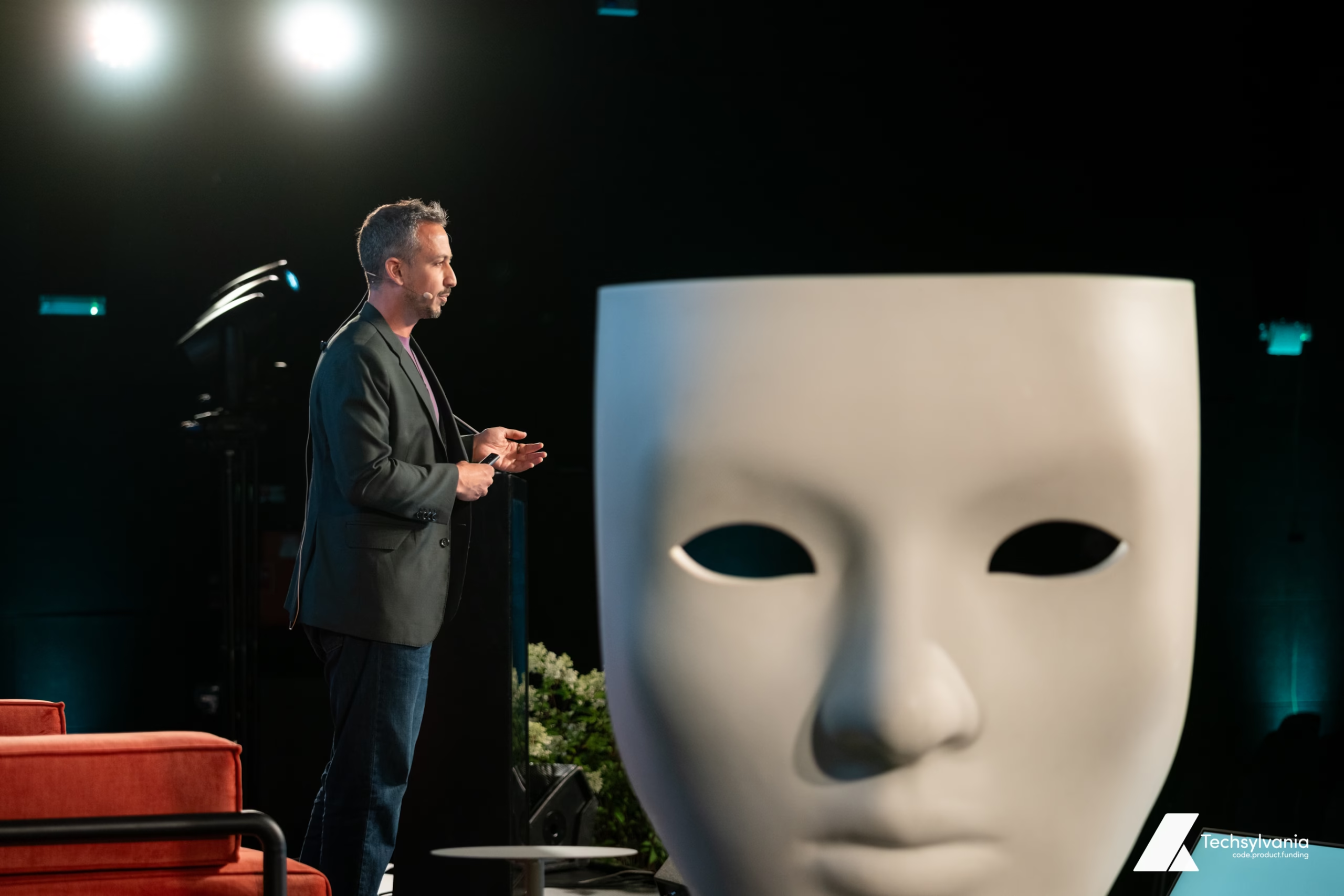
Day 2 opened with an unexpected argument: stop using AI. Sasha Khadivian, GTM Software Engineer at Cursor, made the case that the winners in this era won’t be the ones using AI for everything, but the ones who know when not to use it, comparing deterministic software to Lego blocks and AI to water, where the builder’s job is to create the right containers rather than fight the unpredictability.
Drawing on his own background as a classically trained musician, he argued that engineering discipline, knowing what not to build, comes from tradition and judgment, not syntax.
“The winners of this space are not the ones who use AI in every possible application. They’re the ones who know when not to use it.”
Conversational Analytics: How Humans, Agents, and Lakehouses Learn to Speak the Same Language – Marcin Bawor, Data & AI Sales Specialist, Google
Marcin Bawor from Google Cloud framed today’s shift, from typing keywords to expressing intent, as the thread running through modern data infrastructure. His core argument centered on the “semantic contract”: without a shared semantic layer defining what terms like “revenue” actually mean across a business, AI agents produce inconsistent, technically valid but conflicting answers.
The honest admission that landed well: while companies have built plenty of tools for human users, almost nobody has successfully orchestrated a full business process end-to-end with agents yet. And the real obstacles – ownership, versioning, and trust- are people and process problems, not technical ones.
Same Same but Different: Building Product in Traditional Tech vs. AI-Native Companies – Michael Buzinover, Former Product Manager, TikTok & Perplexity
Michael Buzinover, who spent seven years at TikTok before moving to Perplexity, compared building product before and after AI became core to the stack. His sharpest observation was about time: at TikTok, much of a PM’s job was information logistics, chasing documents, tracking down engineers, while at Perplexity, the codebase itself becomes something you can query directly, freeing up time for the judgment calls that actually matter.
His advice on staying relevant was to go deep rather than broad: find one problem that motivates you and build from there, rather than testing every new tool. He also flagged the underrated value of psychological safety with AI, asking a model the “stupid” question you’d hesitate to ask a colleague.
Scale Content. Not Headcount. – Vladimir Danila, Founder & CEO, Linearity
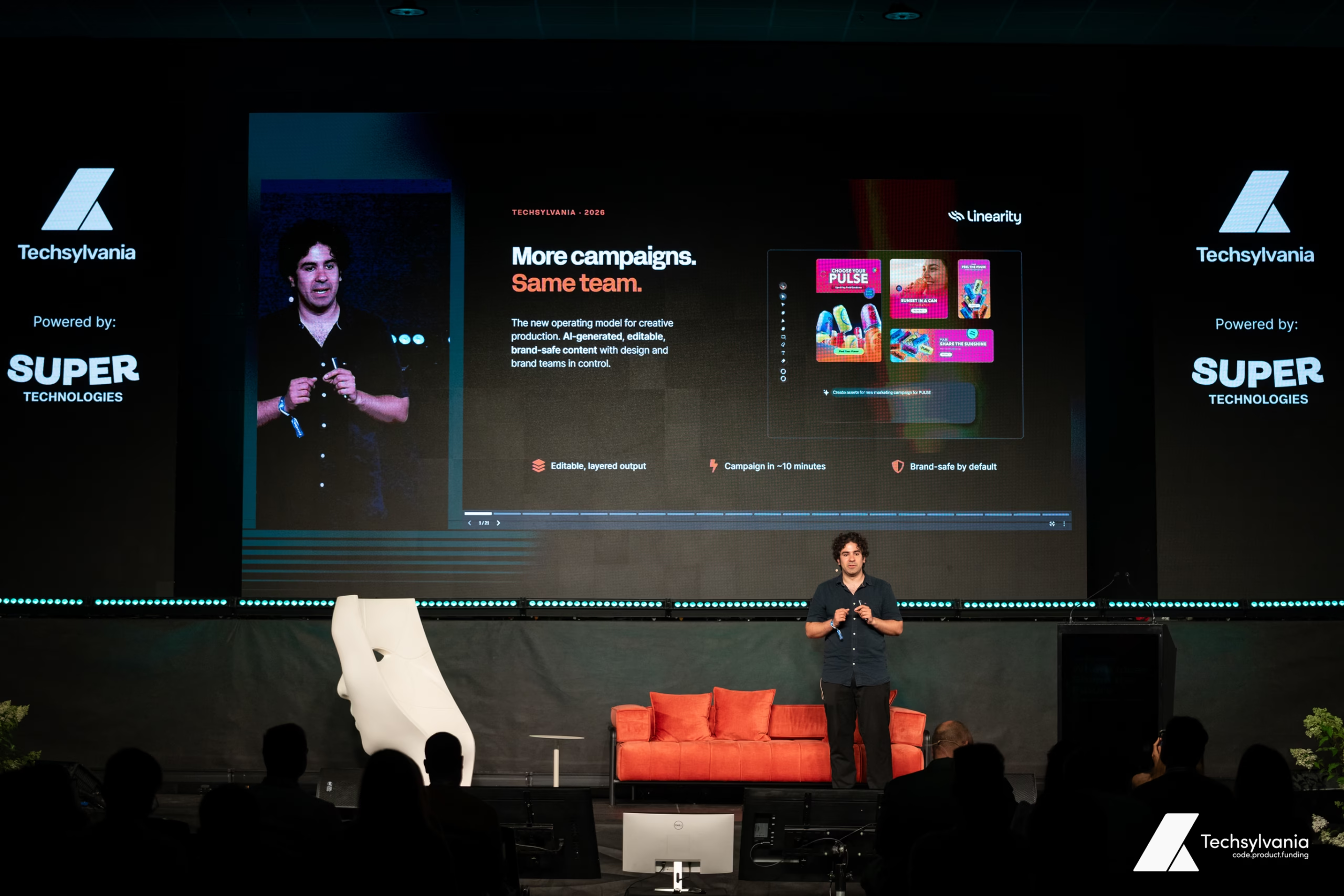
Vladimir Danila, who started Linearity at 17 and returned to Techsylvania for the third time, argued that AI productivity gains have transformed software engineering but not marketing, because the bottleneck isn’t generating a first image; it’s everything after: fixing errors, resizing, localizing, and maintaining brand consistency. That’s the gap Linearity is building for: a platform for non-designers to produce on-brand, fully editable content without touching the design backlog. The numbers backed it up: one B2B company cut its agency budget by 25%, and an agency on the platform now handles ten times more clients at the same pace.
His advice to founders was the oldest one in the book: just start.
From Brain to Quantum the Journey – Newton Howard, Chairman, ni2o
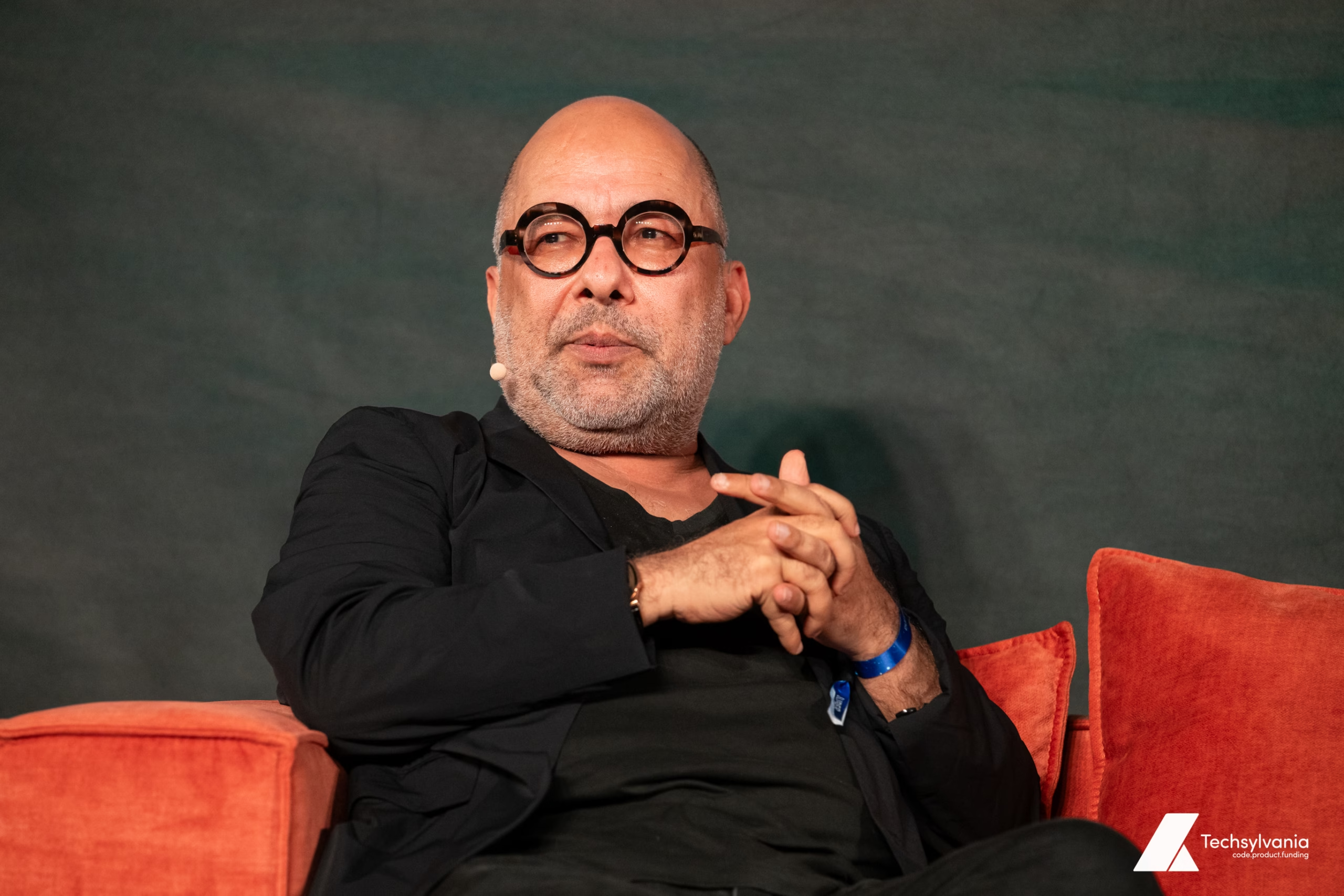
Newton Howard, Oxford and MIT computational neuroscience professor and founder of ni2o, opened with a video of a Parkinson’s patient before and after deep brain stimulation, then introduced his team’s next step: a rice-grain-sized chip, implanted through the nasal cavity, that operates at the brain’s own low-power frequency. His deeper research found the brain exhibiting what he calls “quantum-light” behaviors, exceptionally efficient properties his chip only reproduces when attached to biological tissue, pointing to an entirely new category of computing between classical and quantum.
On building deep tech companies, his advice was direct: hold a 20-30 year vision against investors pushing for 5-7 year returns, and stay with an unsolved problem until you understand why it hasn’t been solved.
AI Needs a Home: Building Europe’s AI Future from Romania – Peter Wakelam, CEO, M247 Global
Peter Wakelam, CEO of M247 Global, now headquartered in Bucharest, gave a ground-level look at the infrastructure gap underneath the region’s ambitions: he’s had to turn away major US tech deployments in Romania simply because the data center capacity, power, and cooling weren’t ready. His ask was for a virtuous cycle, where local infrastructure attracts bigger deployments that fund more infrastructure, since the alternative means companies storing data outside Romania and outside European jurisdiction entirely. His view on Romania’s opportunity was grounded: the country doesn’t need to build the next large language model; it needs the infrastructure to execute and apply tools built elsewhere at scale.
Building a Startup with Systematic Inventive Thinking – Sam Lipoff, Partner, Liminal
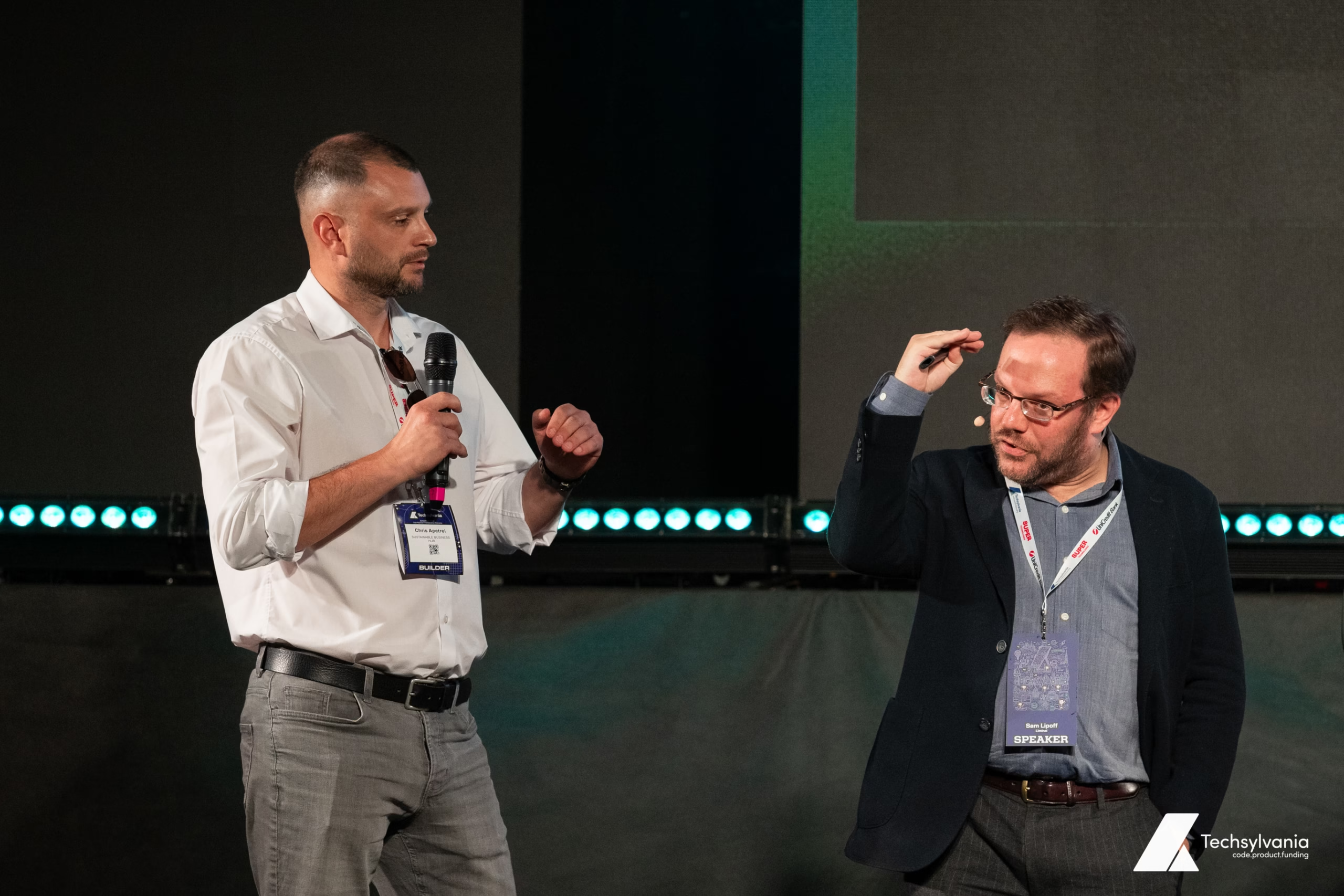
Sam Lipoff, Partner at Liminal, opened with a provocative claim: creativity can be reduced to an algorithm. His framework, drawn from a Soviet study of invention called TRIZ, breaks innovation down into five patterns: subtraction, division, multiplication, attribute dependency, and task unification, each illustrated with concrete examples, from smartphone photography to Domino’s delivery guarantee.
His parting note: AI can run these patterns algorithmically faster than any human, but validating whether the results actually matter still requires you.
Becoming Irreplaceable in the Age of AI – Noah Berkson, Managing Partner, Austin Capital
Noah Berkson opened with a question few AI conference speakers ask: when AI makes everyone maximally productive, what actually becomes the advantage? Drawing on the “Blockbuster moment,” where the company failed not from missing technology but from misunderstanding what people valued, he argued that every technological revolution makes something abundant and shifts value to whatever becomes scarce instead, and what’s becoming scarce now is genuine human connection. Citing data on declining friendships and rising loneliness, his point was economic, not sentimental: capital and opportunity move through relationships, so the people who know how to build them will capture disproportionate value.
His practical advice was to skip trying to seem interesting and focus on being genuinely interested, since the best conversation at a conference rarely comes from the most impressive person in the room.
Scale Up Europe – Hermann Hauser, Co-Founder & Venture Partner, Amadeus Capital Partners
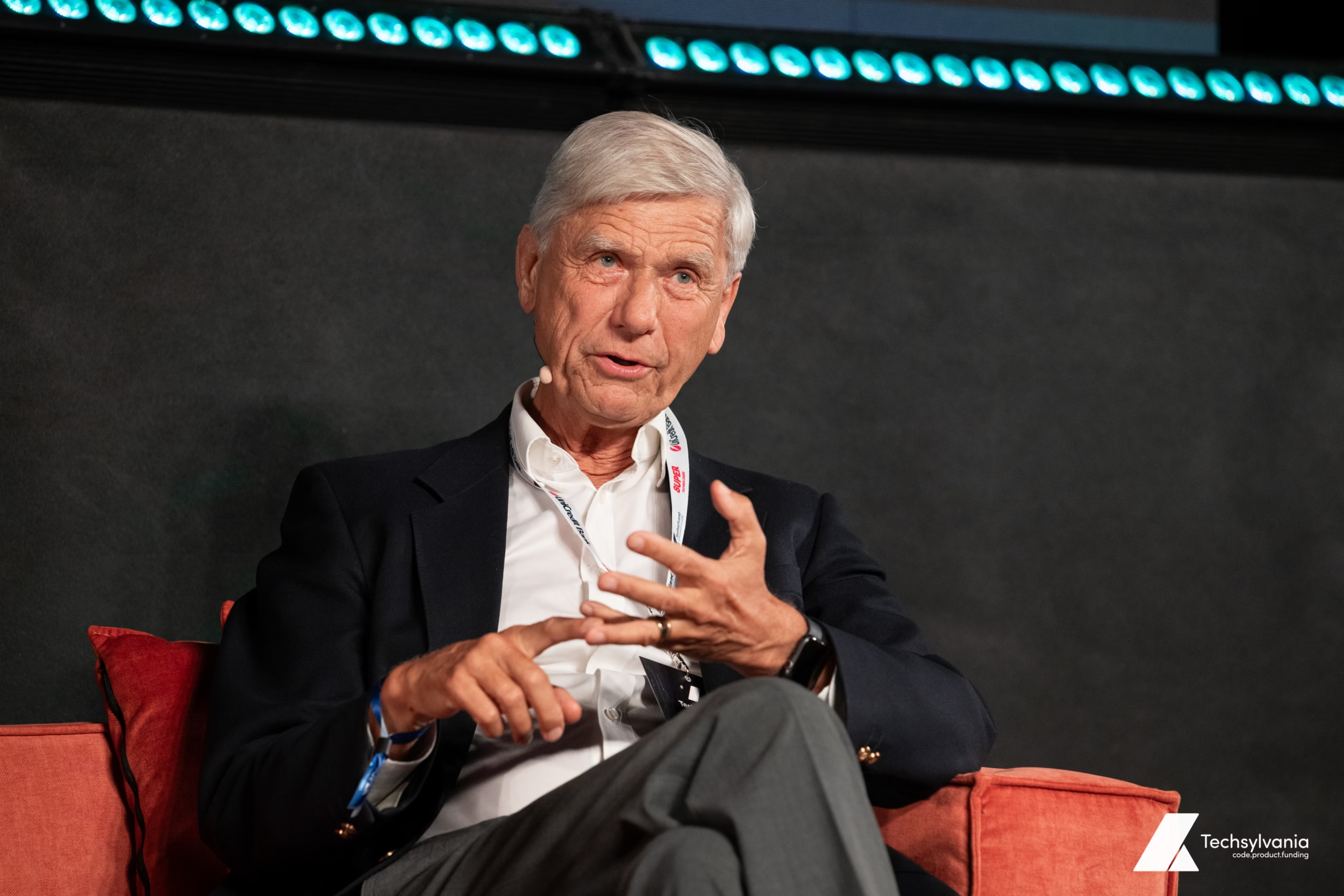
Hermann Hauser, who helped establish ARM as an independent entity, spun out of Acorn Computers, took the Techsylvania stage for a true masterclass on building deep tech at a European scale. He recalled how a lack of capital forced Acorn’s engineers to keep the first ARM chips small and simple, a constraint that inadvertently led to the low power consumption now powering nearly every smartphone in the world.
“It’s a powerful reminder for every founder that sometimes, a lack of resources is your greatest competitive edge.”
Q&A STAGE
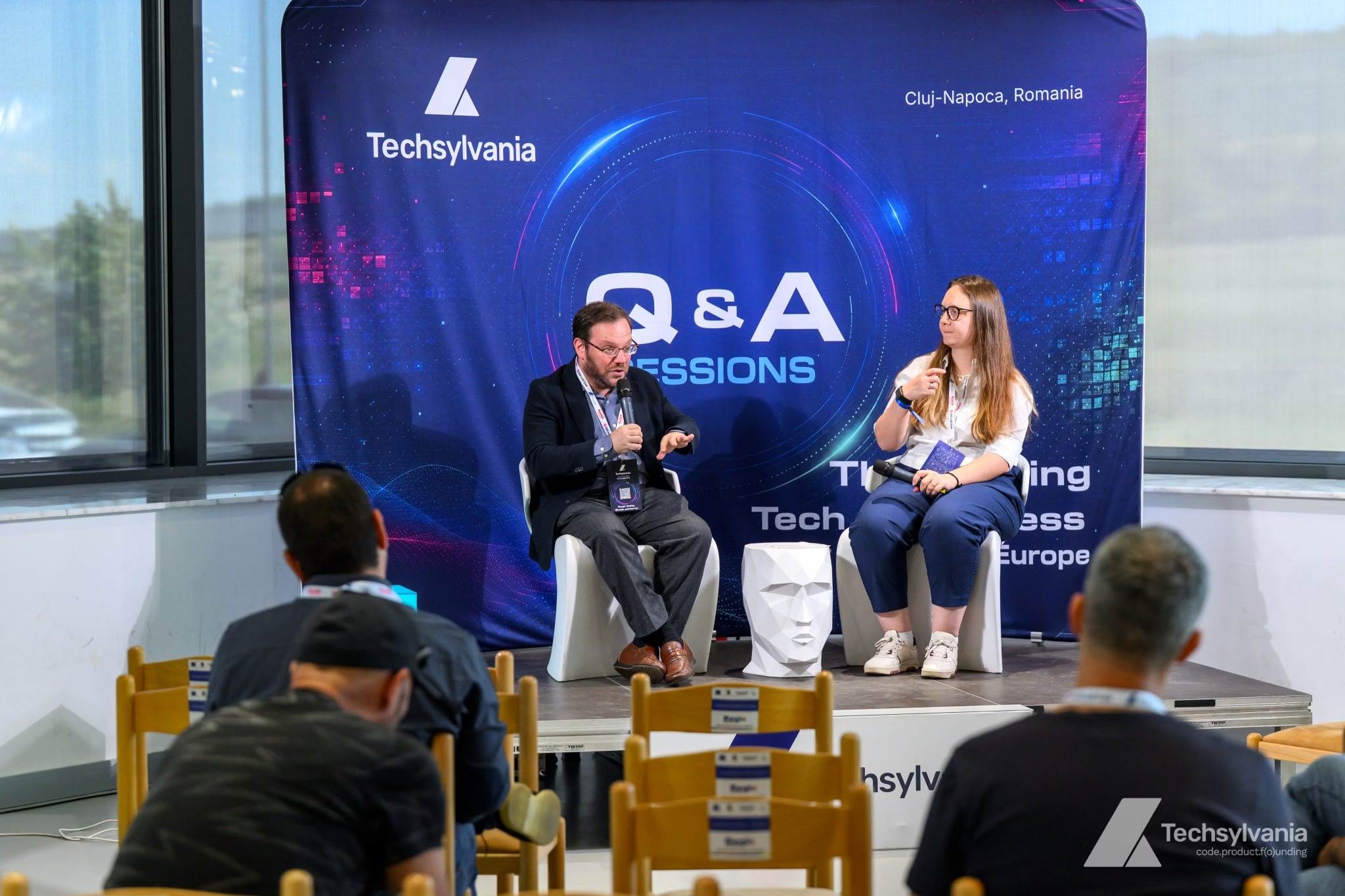
While the Center Stage brought scale and story, the Q&A Stage brought personal connection. Speakers like Sasha Khadivian (Cursor), Michael Buzinover (Perplexity), Vladimir Danila (Linearity), Sam Lipoff (Liminal), and Noah Berkson (Austin Capital Partners) engaged in raw, audience-driven discussions on leadership, venture, and the real work behind the scenes.
IMPACT STAGE
FastSet: Verified Settlement for AI-Native Work – Grigore Rosu, Co-Founder, FAST
Grigore Rosu presented FastSet, a verified settlement system built on 25 years of formal verification research, at NASA and beyond. His core insight is that most blockchain transactions don’t actually need global consensus, so FastSet replaces the sequential chain with a set-based architecture where independent transactions settle in parallel, hitting over 200,000 transactions per second while still producing a mathematical proof of correct execution.
His closing point extended this to AI agents: in a world where AI increasingly does the work, trust won’t come from a promise, but from a proof.
Panel: AI Adoption from the Trenches – Cosmin Condurache, VP of Product – Data Products, & Richard Wartell, VP of Data Products & Sameen Jalal, CTO & Tom Stoepker, VP of Product Platform, Super Technologies
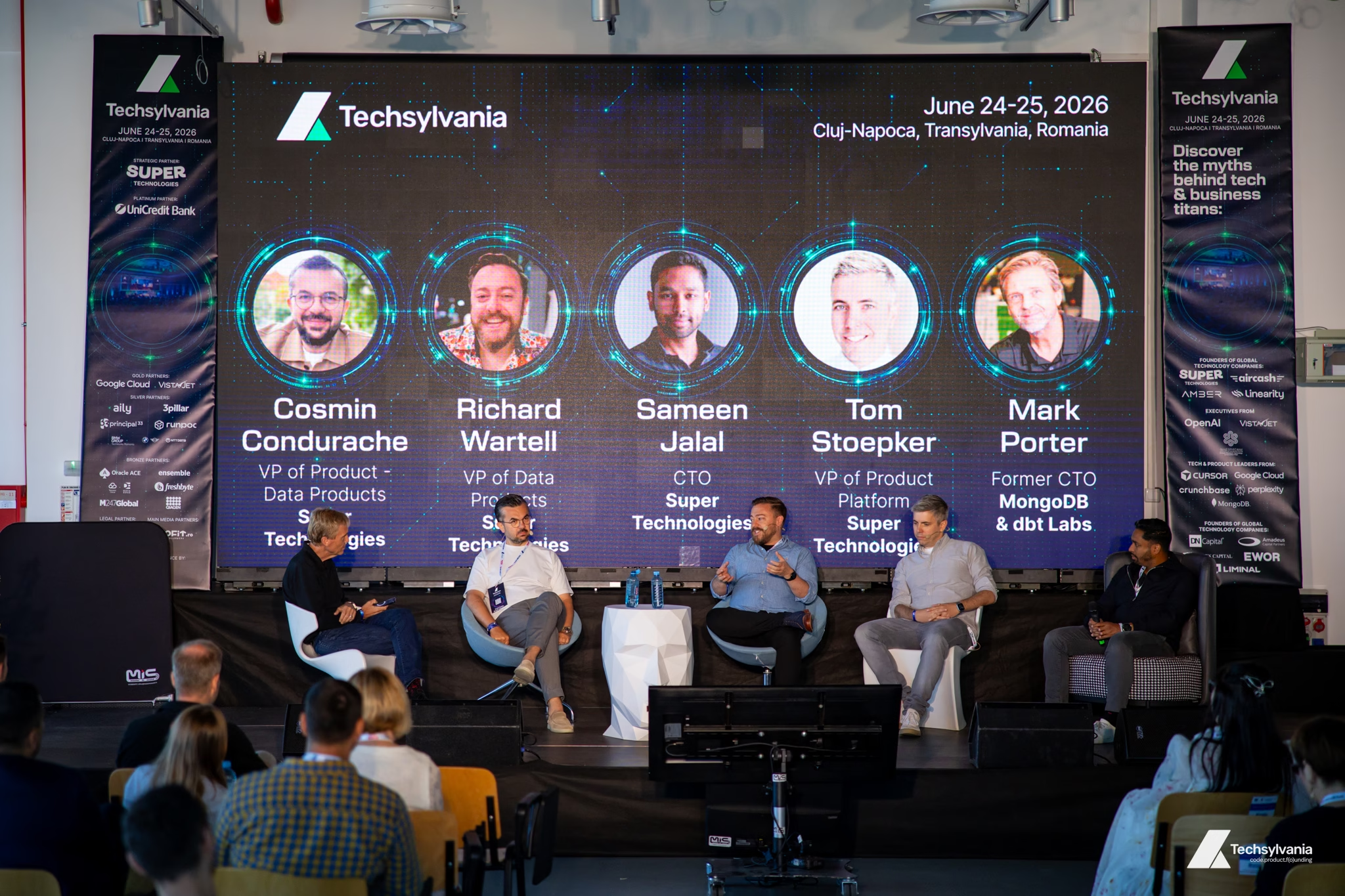
A panel of four builders from Super Technologies, moderated by Mark Porter, gave a grounded account of AI adoption inside a real company, opening with the story of an engineer’s AI coding tool accidentally deleting a cluster. Cosmin Condurache shared that Super blew past its 80% AI adoption target, hitting 98%, shifting the real question from adoption to maturity: are engineers directing AI and reviewing its output, or just using it as autocomplete? The panel also described weaving AI into interviews to see how candidates think with it, and Tom Stoepker’s framing of the deeper shift: engineers need to move their attachment from the code they write to the outcomes they’re driving.
Their shared view on what separates winners going forward: clean data, genuine customer focus, psychological safety to experiment, and a willingness to let go of the old idea that writing code, or managing process, is where the value lives.
Resource limitations on the path to Artificial General Intelligence – David Johnson, Founder & CEO, NovaTek Global Partners
David Johnson, CEO of NovaTek Global Partners and former Special Forces strategist, argued that AGI’s biggest obstacle isn’t technical; it’s physical. Modeling AI demand against realistic infrastructure buildout, he projected a gap of 185 petawatts by 2035, driven by bottlenecks few are discussing: outdated transformer technology, concentrated semiconductor supply chains, and widening talent and water constraints.
His framework for closing the gap is threefold: more power, more efficiency, and harder strategic decisions about compute allocation, with the biggest entrepreneurial opportunity in the last, most underexplored category. His closing point: the next trillion-dollar AI businesses won’t be the ones that build the most capable models; they’ll be the ones that figure out how to sustain them.
Awakening the Enterprise: From Passive AI to Autonomous Operations – Monica Garza, Former VP of IT, adidas
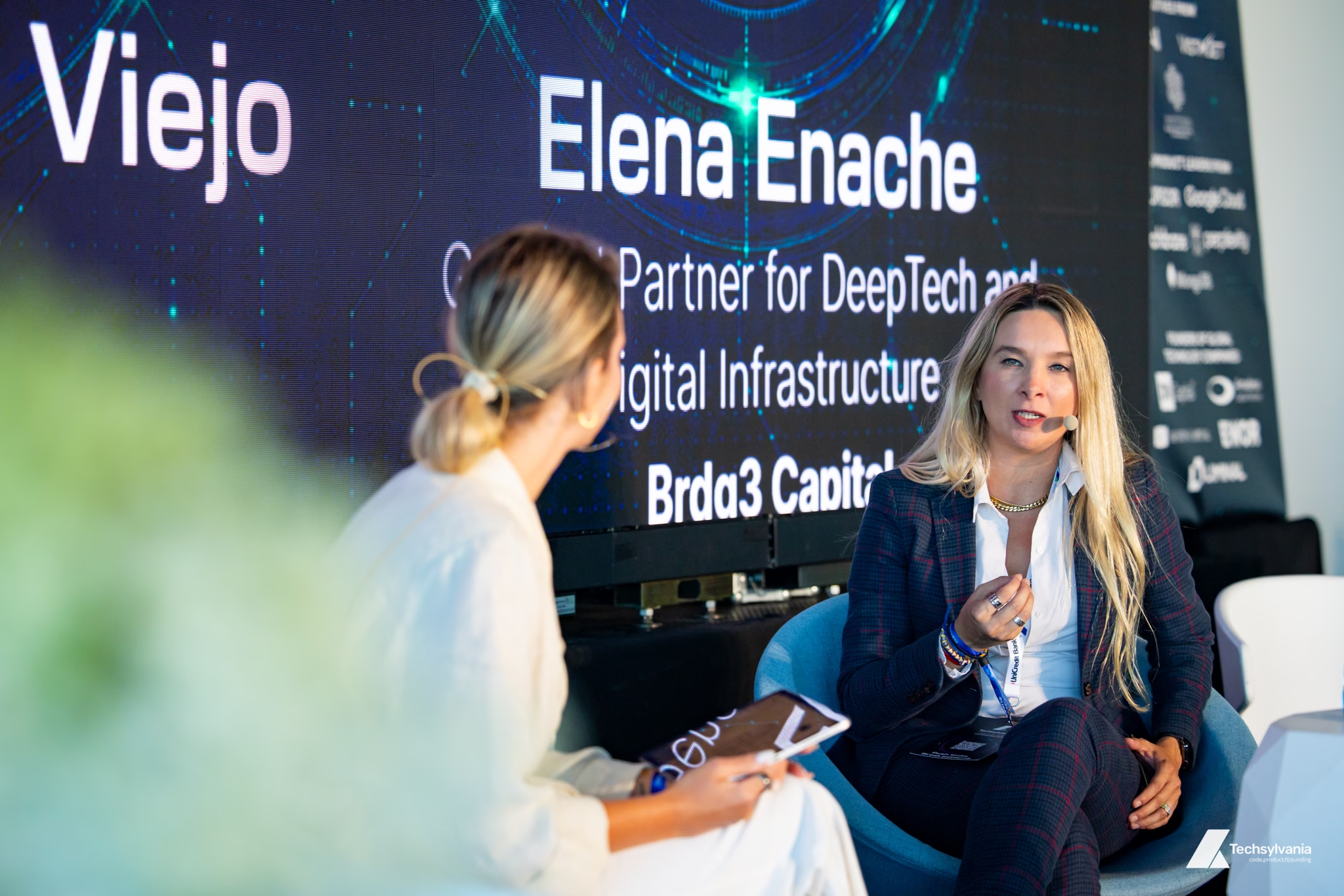
In conversation with Elena Enache, Monica Garza Viejo, former VP of IT at adidas, gave an honest account of why most enterprises are further from real AI transformation than they think. Her sharpest point was on leadership paralysis, arguing that failing to decide is itself a decision, and usually the wrong one, while the two unglamorous prerequisites for everything else are clean, well-governed data and active governance built into system architecture rather than policy documents. At adidas, her team drove adoption not through top-down mandates but by supporting early adopters and letting demonstrated value spread organically, resulting in 500% growth in internal AI usage.
Proof Over Potential: Venture Capital and Rethinking the Path to Work – Maks Stempniewicz, General Partner, Techni Venture
In conversation with Andrea Cordas, Maks Stempniewicz traced his path from a failed startup to founding Techni Ventures, where his contrarian thesis is investing only in the US, backing Thiel Fellows and exited founders because they represent proof, not potential. He was sharply critical of European investors’ obsession with downside protection, arguing venture returns depend on outliers, and that the biggest mistake isn’t backing the wrong company, it’s passing on the right one. He also detailed Techni Schools, his Polish technical high school where students work half-time for real companies by their fourth year, several graduating to salaries far above older peers on traditional tracks.
His closing advice to European founders wasn’t to wait for the ecosystem to mature, but to go to the US, build relationships there, and bring that knowledge back.
Gaming’s Next Chapter: Technology, Creativity, and the New Normal – Mihai Pohontu, CEO, Amber
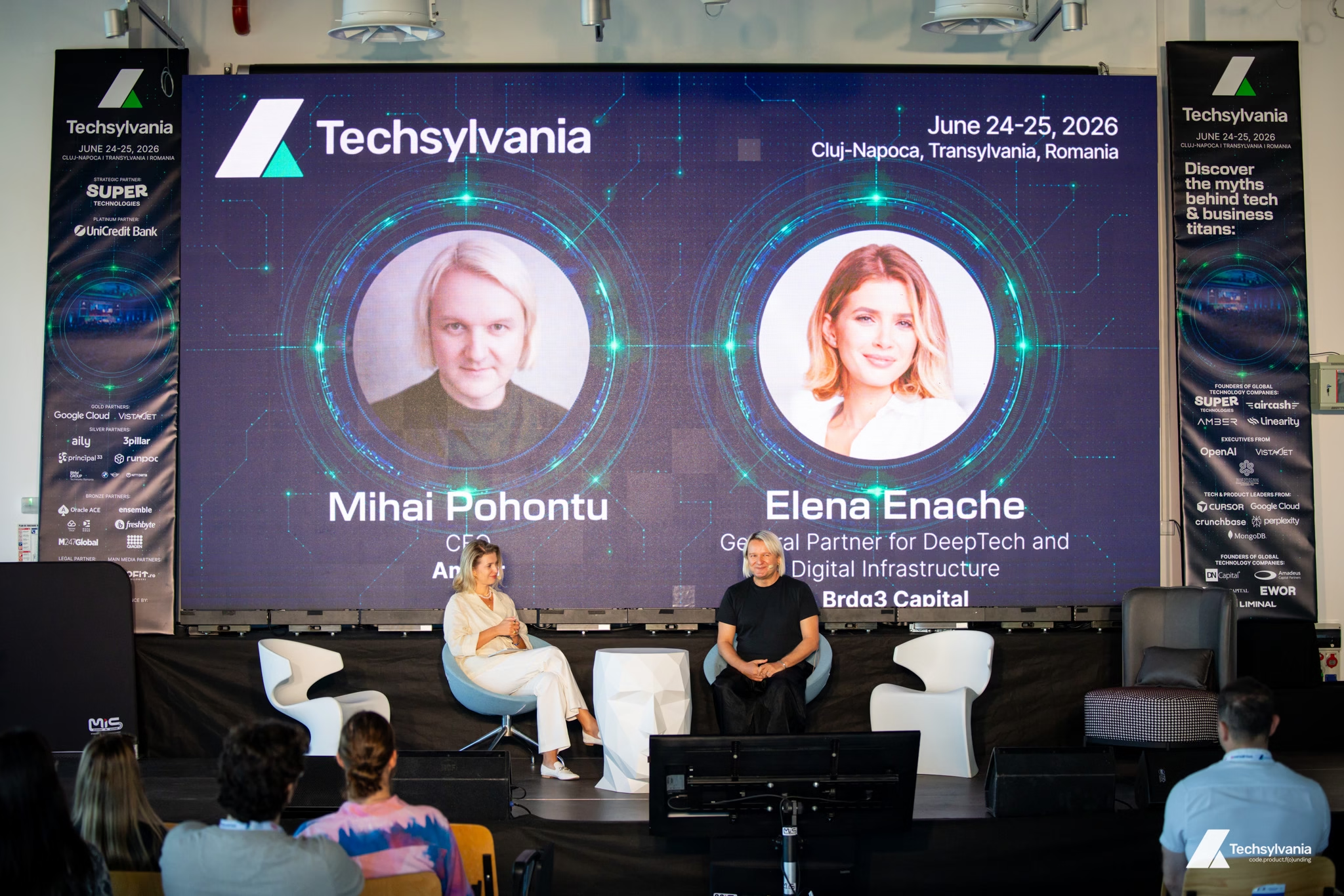
Mihai Pohontu, CEO of Amber, traced his path from accidental game tester to running a 900-person studio, and made the case that games sit at a unique intersection of science and art, which is also why the industry adapts well to disruption. He was precise about where AI is and isn’t changing production, noting gamers’ strong aversion to AI-generated art even as AI transforms asset preparation, level design, and early concept work. His most vivid vision was for AI-native games where dialogue and characters respond genuinely to each player rather than pre-written branches, and where an agent could eventually generate a game from scratch based on what you tell it you want.
Not Another Panel: Join to Meet Your Edge – Laura Calmore, Conscious Regenerative & Mindfulness Facilitator, Revera
Laura Calmore opened with a provocation: we are the most optimized generation in history, and also among the most anxious and disconnected. Her argument was that systems built purely for efficiency and extraction crowd out something essential: the natural rhythm of rest and recovery that both people and ecosystems depend on to function. Drawing on regenerative principles, she proposed shifting from extraction to restoration, small choices like building in space for reflection rather than just production, as the real foundation for judgment and creativity that AI can’t replicate. The session closed with something rare for a tech conference: a guided breathing exercise, a quiet demonstration of the argument itself, that before building systems that serve humanity, we have to remember how to be human together.
Techsylvania 2026, Day 2: The 13th Edition Comes Full Circle
Day 2 reminded us that behind every bold vision is a team, a mindset, and a million small decisions. From founders building at the edge of what’s possible, to investors betting on proof over potential, the message was clear: the future belongs to the builders.
Techsylvania 2026 brought together over 3000 participants and over 50 leaders in business and technology across the Center Stage, Impact Stage, Q&A Stage, and Workshop Stage.
With over 314 meetings facilitated through the matchmaking area, attendees had the chance to engage in meaningful conversations that might not have happened anywhere else. The Startup Alley brought together 40 innovative startups, creating space for discovery, partnerships, and peer exchange. At the expo area, our partners hosted interactive booths sharing opportunities, insights, and even prizes.
The Official Reception on Day 1 and the Cocktail Party on Day 2 offered exclusive settings for deeper networking and relaxed conversations. Whether you were speaking with a global tech leader, connecting with a potential investor, or simply sharing ideas over coffee, the real value of Techsylvania lives in the community it brings together, one you don’t easily find anywhere else.
As we reflect on the success of Techsylvania 2026, we extend our heartfelt gratitude to the entire community, participants, partners, speakers, and volunteers, who contributed to making this event a resounding success. We look forward to continuing this journey of business and technology exploration and discovery with you all in the years to come.
We’ll see you in 2027, until then, keep pushing boundaries.